

Old Friends
Plus a special guest at Ida

Some dishes taste of home.
No matter where in the world you are, that first forkful will instantly teleport you back to your kitchen table. Every family has a repertoire of these dishes: a favourite recipe passed down the generations, or a bunch of seemingly incongruous, yet nutrient-rich, ingredients that once worked their magic on a picky child and are then served on repeat for years by her grateful parents. Something you perhaps enjoyed at a restaurant and managed to successfully recreate at home, or, conversely, a one-off fluke which everyone loved and yet whose precise recipe now maddeningly eludes you.
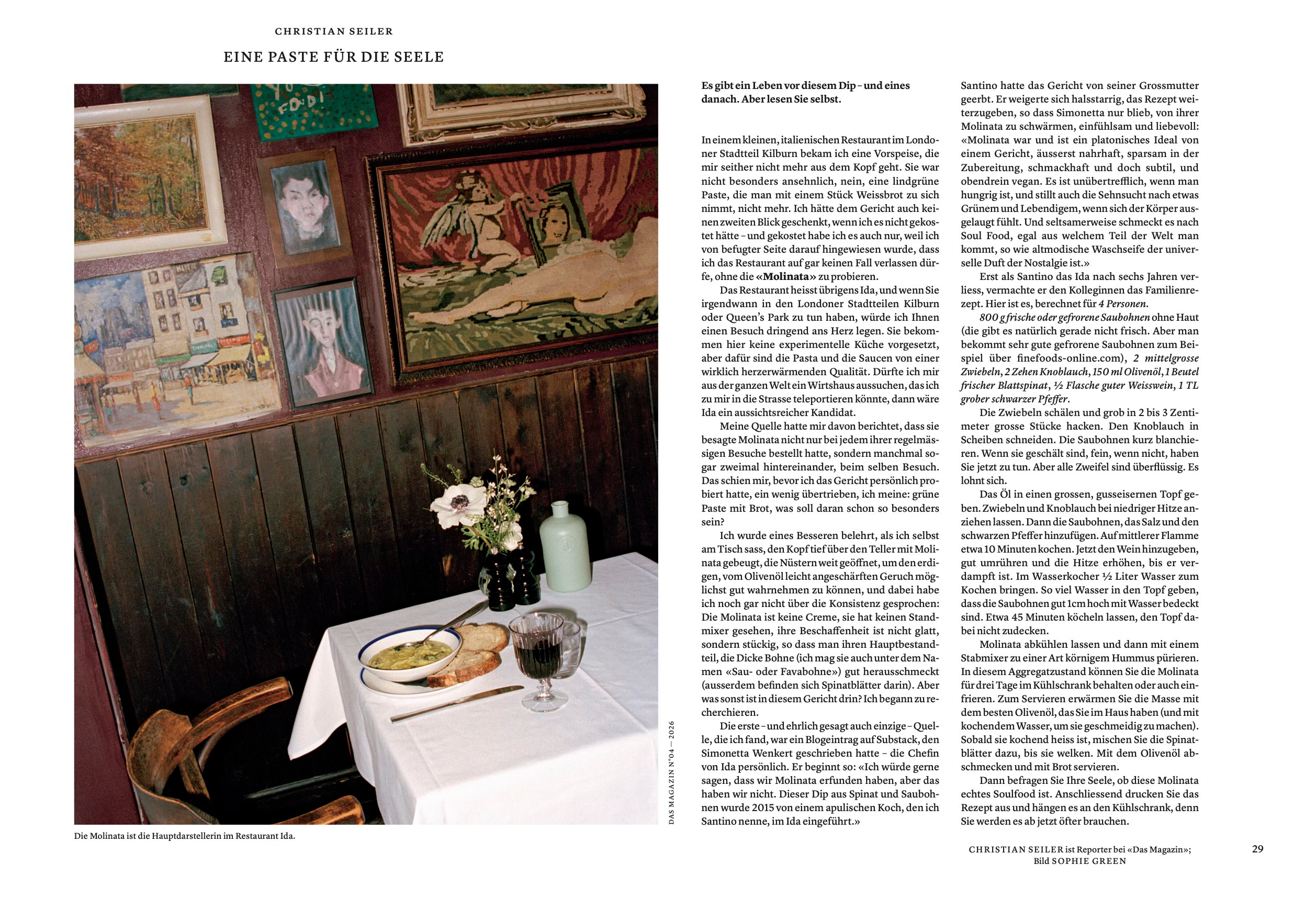
We are authors of our own mythologies, conferring heritage status upon our favourite foods so that they become part of a very specific family lore. We even give names to those dishes, such as the Molinata we serve at Ida, which was recently the subject of a two page spread in the Swiss daily, Tages-Anzeiger, and yet whose name does not show up in a google search of Puglian dishes. Turns out Molinata was the entirely made-up name for a broad bean and spinach stew which one of our chef’s Nonna used to prepare as an after school snack for her grandchildren, though the etymology of the name “Molinata” could conceivably lie in the noun mulino meaning “mill”, referring to the act of pureeing the broad beans.
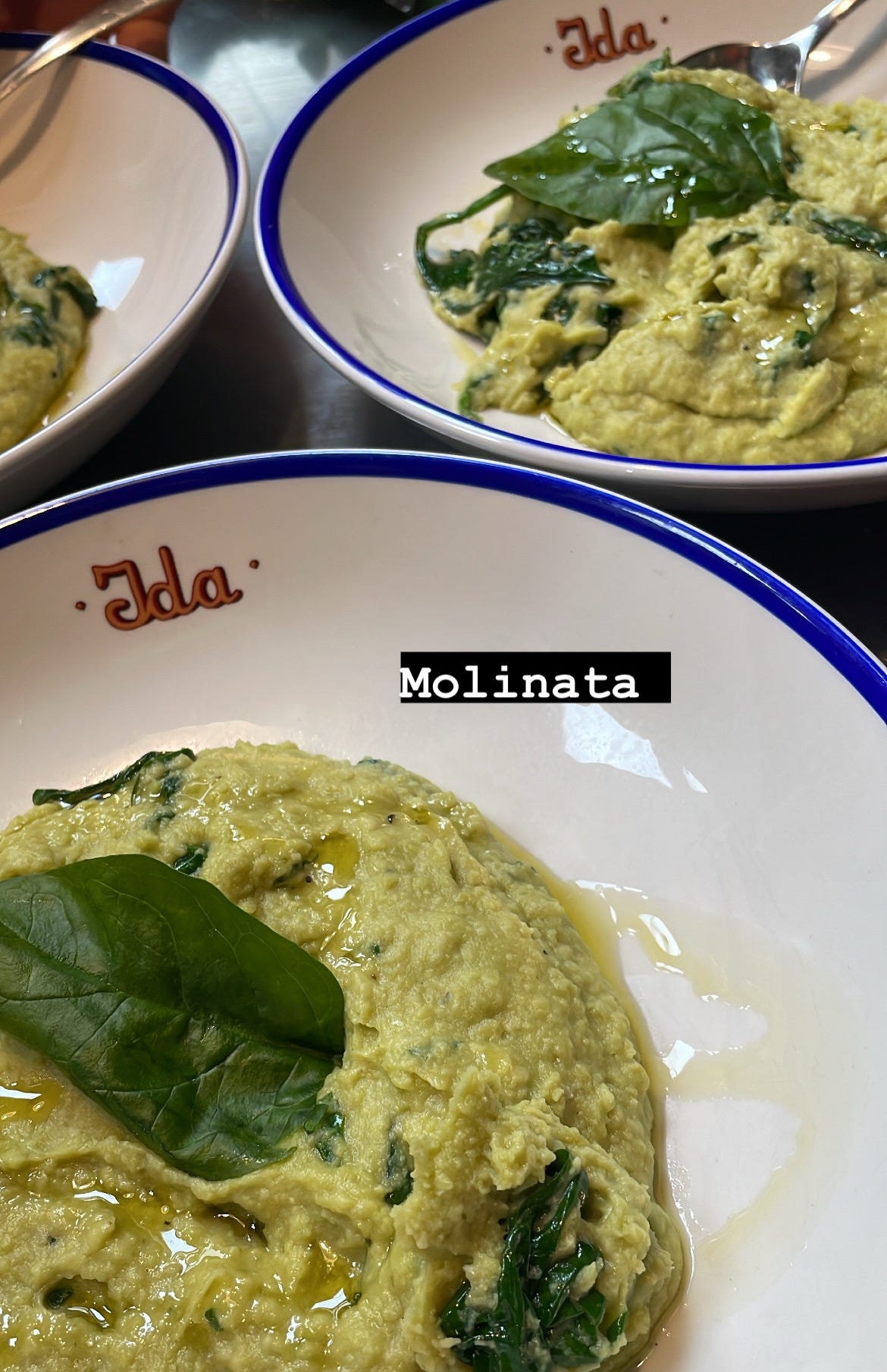
Similarly, Ida, my mother in law, used to make a green, delicately flavoured passata di verdure, a kind of strained velouté of boiled vegetables, which she called Fra’ Pappino, meaning “Brother Pap”. There was no soffrito, no addition of herbs or oil or garlic - which meant that each vegetable - carrot, celery, spinach, parsley, chard - tasted entirely of itself.
I remember Ida turning up at Rome’s San Camillo hospital, a few hours after I had given birth to our first child, Isotta, bearing a two litre plastic bottle of Fra Pappino to consume cold. I sat up in bed to drink the dark green liquid, and as all those vitamins and minerals coursed through me, I could feel my tired and depleted body coming back to life as it had done for Ida herself when half a century previously she had given birth to her first child in Rome and made the soup upon her return home. (And, which her daughter, Clara now does, each year on the occasion of her birthday in memory of her mother.)
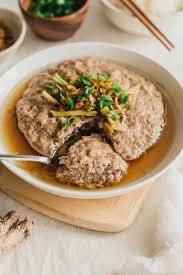
There was another equally plain but comforting dish that Ida used to make called Carne Mascié, one again, that I can find no trace of online, comprising very good quality minced beef (ideally ground for you at the butcher’s) mixed with a little olive oil, salt and pepper, then spread out on a plate in a kind of giant patty. This is cooked, covered, on a Bain Marie until no longer pink, then cut into quarters like a cake. Like the Fra Pappino, it tastes only of itself, while the meat juices provide the perfect opportunity for scarpetta. When researching it, I found an almost identical, although a little more seasoned, Hong Kong version made with pork.
In Oscar Hijuelos novel, Our House in the Last World, about the Cuban emigré experience, the protagonist, Hector, dreams of the “magic potion” he drinks at his grandmother’s house, a “wonderful, mysterious drink” connecting him to his old life in Cuba. It is only when he becomes an adult that he realises the drink is simply Hershey’s syrup and milk, purchased by his grandmother, no doubt, at great expense, on the black market.
The point is that the drink becomes what Hector wants it to become, filling a very specific longing for home, like the food your children ask for when they visit you, as well as the dishes they cook for their own friends when they no longer live under your roof.
Classics also acquire their status through repetition, so much so that you sometimes need a holiday from them. One such ingredient in our house is boiled pearl barley. It is such a versatile and forgiving grain that it lends itself to almost anything: a creamy mushroom risorzo, accompanied by ragu’ or indeed any kind of pasta sauce, or simply eaten cold like a salad with chopped vegetables, herbs, pickles, salad tomatoes, and any leftover meat or fish, then dressed with oil and vinegar. It is the perfect pulisci frigorifero, or fridge-clearing ingredient, as the grains hold their shape cold, but also magically release their starch when prepared like a risotto. As a result, the temptation to eat it on repeat means that we sometimes have it several times a week. I joke that our Ecuadorian cleaning lady tells people that Italy’s national dish is actually pearl barley, not pasta, as every week before she goes home, we prepare her a steaming dish of orzo accompanied by whichever sugo we have in the fridge plus a generous handful of parmesan.
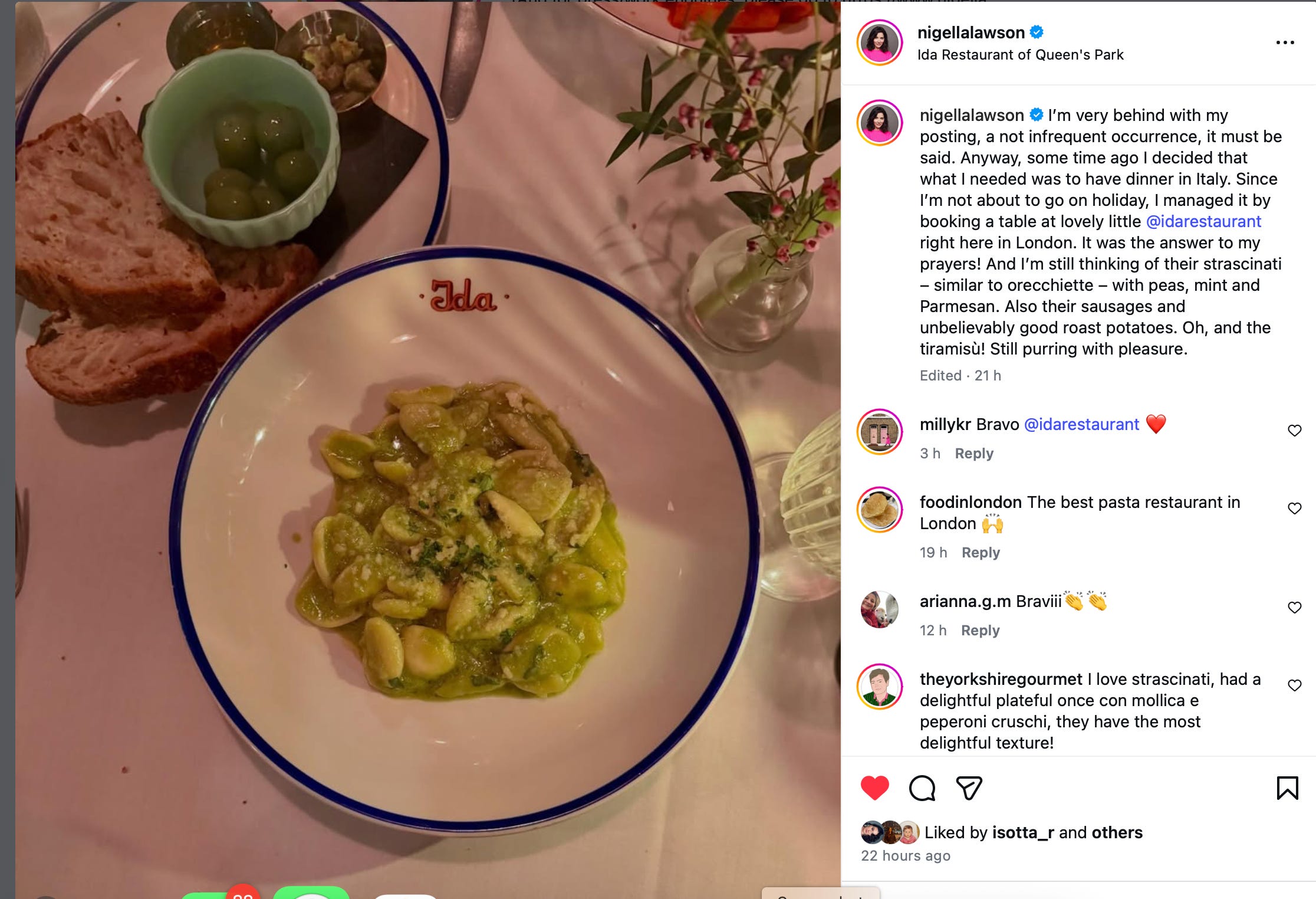
Oh, and last week, Nigella came to Ida and wrote this lovely, open-hearted piece about her experience.
This beautifully captures how food becomes mythology in families. The idea that these homemade names like Molinata and Fra Pappino hold more weight than any official recipe really nails the emotional side of cooking. Back home, my grandma's "special chicken" turned out to just be rotisseri chicken with her own gravy, but it was still special somehow.